

TL;DR:
- Retail fixtures shape customer flow, product visibility, and sales performance, making their selection crucial for new stores. Combining modular core shelving, promotional units, and strategically placed POP displays ensures layout flexibility, brand cohesion, and operational efficiency. Prioritizing layout logic and fixture systems over aesthetics leads to better long-term merchandising success.
Retail fixtures are the physical structures used to display, organise, and promote merchandise on a shop floor, and choosing the right mix is one of the most consequential decisions a new store owner makes. The types of retail fixtures new stores select directly shape customer flow, product visibility, and ultimately, sales performance. From gondola shelving and slatwall systems to point-of-purchase (POP) displays and digital units, core fixture categories span a wide spectrum of functions and price points. Getting this right from day one prevents costly layout mistakes that are expensive to fix after opening. 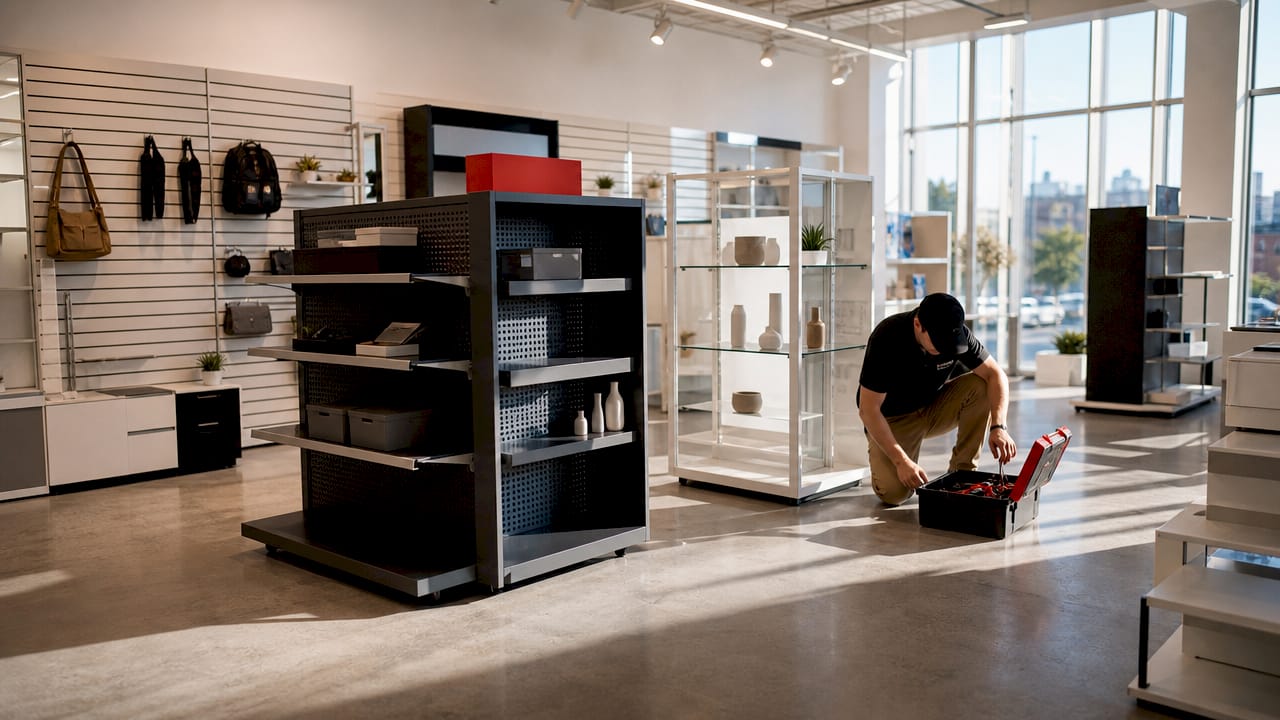
1. Essential fixture categories every new store needs
New retail stores typically rely on a combination of seven fixture categories to build a functional and engaging shop floor. These categories form the backbone of any store layout, regardless of format or product type.
- Shelving systems. Gondola shelving is the workhorse of most retail environments. Double-sided, freestanding, and modular, gondola units allow you to pack in a high number of SKUs while keeping aisles clear and navigable.
- End-cap displays. Positioned at the end of gondola runs, these fixtures are prime promotional real estate. New stores use them to highlight new product launches, seasonal offers, or high-margin lines.
- Wall display systems. Slatwall, gridwall, and pegboard panels maximise vertical space along perimeter walls. These are particularly effective in boutiques and specialty shops where floor space is limited.
- Freestanding floor units (FSDUs). Modular pop-up racks and freestanding display units offer flexible placement for seasonal or promotional stock. They can be repositioned without disrupting the core layout.
- Display cases and counters. Glass and acrylic display cases protect high-value or small items such as jewellery, electronics accessories, or cosmetics. Checkout counters serve a dual purpose: transaction point and impulse purchase zone.
- Point-of-purchase (POP) displays. These range from temporary cardboard freestanding units to semi-permanent metal and wood structures. POP display types include temporary, semi-permanent, permanent, and digital or robotic formats.
- Digital and interactive displays. Screen-based units are increasingly common in new stores, particularly in fashion, electronics, and beauty retail. They deliver dynamic content and can replace printed signage across multiple product zones.
Understanding these categories gives you a framework before you commit to any single purchase. Think of them as layers: core shelving provides the structure, wall systems extend capacity, and POP units add promotional flexibility on top.
2. How each fixture type works in practice
Each fixture category serves a specific merchandising function, and knowing those functions helps you avoid buying fixtures that look good but underperform in your actual layout. Gondola shelving is modular by design, meaning you can add or remove shelf levels, end panels, and accessories as your product range changes. A gondola shelving setup in a small grocery or convenience store typically runs in parallel rows, creating a grid layout that guides shoppers from entrance to checkout. The double-sided configuration means every linear metre of floor space generates display on both faces. End caps are among the highest-converting fixtures in any store. Placed at the terminus of a gondola run, they capture attention from shoppers moving along the aisle. New stores use end caps to test new products before committing to full shelf placement, making them a low-risk promotional tool. Wall-mounted systems such as slatwall and gridwall are particularly valuable when your floor space is under 100 square metres. Slatwall accepts a wide range of accessories including hooks, shelves, and display arms, making it one of the most adaptable retail shelving options available. Gridwall panels offer a similar range of accessories with a more industrial aesthetic, often favoured by fashion and lifestyle brands. Freestanding display units shine in promotional contexts. A well-placed FSDU near the store entrance or beside a checkout queue can lift impulse purchases significantly. The nine core display rack types identified in current visual merchandising guides include waterfall arms, dump bins, and countertop spinners alongside the more familiar gondola and slatwall formats. Countertop and checkout displays are designed to capture last-minute decisions. Small acrylic trays, spinner racks, and tiered shelf units placed beside the till convert browsing into buying at the final moment of the customer journey. Pro Tip: Place your highest-margin impulse items at eye level within 60 centimetres of the payment terminal. Checkout counter displays in this zone consistently outperform the same products shelved elsewhere in the store.
3. Custom versus ready-made fixtures: which suits a new store?
Custom and ready-made fixtures represent two distinct investment strategies, and most new stores benefit from using both rather than committing entirely to one approach. Custom fixtures are built to exact store dimensions and brand specifications. They offer a cohesive visual identity that off-the-shelf units rarely match, and their durability often means a lower total cost of ownership over a three to five year period. The trade-off is lead time and upfront cost. Custom units are best deployed in front-of-house areas where brand impression matters most: entrance zones, feature walls, and hero product displays. Ready-made fixtures offer speed and lower initial outlay. Standard gondola shelving, modular slatwall panels, and stock display cases can be ordered, delivered, and installed within days. They are the practical choice for utility areas, back-of-house storage, and any zone where function outweighs brand presentation. The limitation is that standard sizes may not fit awkward spaces, and the aesthetic is inherently generic.
| Fixture type | Best use case | Cost profile | Lead time |
|---|---|---|---|
| Custom | Entrance, feature walls, hero displays | Higher upfront, lower long-term | Weeks to months |
| Ready-made | Gondola runs, utility zones, back areas | Lower upfront, higher replacement | Days to weeks |
| Modular ready-made | Perimeter walls, promotional zones | Mid-range, highly reconfigurable | Days |
Pro Tip: Allocate your custom fixture budget to the first three metres inside your entrance. This is the zone shoppers evaluate most critically, and it sets the tone for the entire store experience.
4. How store layout determines your fixture mix
Store layout type is the single most important factor in determining which fixtures you need and where they go. A fixture that performs brilliantly in a grid layout can actively obstruct flow in a free-flow boutique.
- Grid layout. Used in supermarkets, pharmacies, and convenience stores. Parallel gondola runs dominate the floor, with end caps at every row terminus. Wall shelving lines the perimeter. This layout maximises SKU density and is the most efficient use of floor space.
- Loop or racetrack layout. A defined path guides shoppers around the perimeter before leading them through the centre. Perimeter wall systems carry the primary product range, while freestanding units and feature tables occupy the central zone. Department stores and large format fashion retailers favour this approach.
- Free-flow layout. Common in boutiques, gift shops, and lifestyle stores. Fixtures are placed without a fixed path, encouraging exploration. Tables, cube units, and small freestanding racks replace gondola runs. The emphasis is on discovery rather than efficiency.
- Set path layout. A single prescribed route through the store, used by IKEA-style retailers and some food-to-go formats. Fixtures line both sides of the path, with no shortcuts available. Every fixture placement is deliberate and sequential.
- Boutique or cluster layout. Products are grouped into lifestyle or category clusters, each with its own fixture arrangement. A homeware store might cluster kitchen, bedroom, and bathroom products separately, each with dedicated shelving, display tables, and signage.
Fixture placement around entry points and high-traffic zones is where most new stores make avoidable errors. Blocking sightlines with tall gondola units in a free-flow store, or placing freestanding racks mid-aisle in a grid layout, creates bottlenecks that reduce dwell time and frustrate shoppers.
5. Practical tips for choosing and organising fixtures
New store owners who approach fixture selection systematically avoid the most common and costly mistakes. These principles apply regardless of store format or product category.
- Start with customer flow, not aesthetics. Map the expected path from entrance to checkout before selecting a single fixture. Fixture choice should follow the logic of shopper movement, not the other way around.
- Use a layered approach. Combine permanent core units such as gondola shelving and wall systems with flexible promotional fixtures like FSDUs and temporary POP displays. A staged fixture approach using temporary POP for promotions alongside permanent fixtures for core merchandising is the recommended model for new stores.
- Prioritise modularity. Adjustable and reconfigurable systems are operationally critical for new stores facing inventory changes, seasonal swaps, and promotional testing. Fixed-only fixture plans become expensive to adapt.
- Maintain visual consistency. Mixing too many fixture materials and finishes creates a disjointed environment. Choose a primary material palette, such as white powder-coated steel with natural wood accents, and apply it consistently across gondola units, wall systems, and display cases.
- Treat fixtures as a coordinated system. Custom fixture programmes that combine perimeter and centre-floor units into a single cohesive environment outperform collections of individually selected pieces. The store should read as a whole, not as a series of separate buying decisions.
- Use counter displays strategically to drive impulse purchases at the point of sale. The checkout zone is the last opportunity to increase basket value before the customer leaves.
Pro Tip: Before finalising your fixture order, walk the empty shop floor with a tape measure and mark out fixture footprints with masking tape. This reveals sightline issues and aisle widths that floor plans alone rarely show.
Key takeaways
The most effective fixture strategy for new stores combines permanent shelving systems with modular promotional units, all selected according to the store’s specific layout type and customer flow.
| Point | Details |
|---|---|
| Start with layout type | Your store layout (grid, loop, free-flow) determines which fixtures work and where they belong. |
| Layer core and flexible units | Combine permanent gondola or wall systems with reconfigurable FSDUs and POP displays for adaptability. |
| Custom fixtures for front-of-house | Invest in custom units at the entrance and feature zones; use ready-made for utility areas. |
| Modularity reduces long-term cost | Adjustable shelving and wall systems accommodate new stock and seasonal changes without full resets. |
| Checkout zone drives impulse sales | Counter and POS displays at the till are among the highest-converting fixtures in any store. |
What I have learned about fixture planning for new stores
The most persistent mistake I see new store owners make is selecting fixtures based on how they look in a supplier catalogue rather than how they function within a specific layout. A beautifully crafted wooden display table looks compelling in isolation. Placed in the wrong position in a grid-format convenience store, it becomes an obstacle that disrupts flow and frustrates shoppers. The concept that changes everything is systems thinking. A coordinated fixture environment treats the perimeter wall, the centre floor, the end caps, and the checkout counter as parts of a single machine. Each fixture category has a role: perimeter systems carry the range, centre-floor units create discovery moments, end caps drive promotions, and checkout displays capture impulse purchases. When these roles are clearly defined before a single fixture is ordered, the store works. Modularity is the detail most new owners underestimate. The store you open in March will not be the store you run in November. Seasonal stock, new product lines, and promotional campaigns all demand fixture flexibility. Slatwall panels with interchangeable accessories, adjustable gondola shelving, and repositionable FSDUs are not just convenient. They are operationally necessary. Stores that lock themselves into fixed-only configurations spend disproportionate time and money on workarounds. My honest recommendation: spend more time on layout logic and fixture category planning than on aesthetics. The look of a store follows naturally from a well-planned fixture system. The reverse is rarely true.
— Lee
How DirectShopfittings can help you fit out your new store
Setting up a new store is considerably easier when you have a supplier who understands the full fixture mix rather than just individual product lines.  DirectShopfittings supplies the complete range of shopfitting equipment new stores need, from modular shelving systems and gondola units to display cases, POP fixtures, and freestanding display units. Their supplier network means hard-to-source items are located quickly, saving you time during the critical fit-out period. Whether you are opening a small boutique or a large format retail unit, DirectShopfittings offers competitive pricing, rapid delivery, and a customer service team that has supported hundreds of store openings. Explore the full retail equipment range to find fixtures suited to your layout, product mix, and budget.
FAQ
What fixtures does a new retail store need first?
The core starting point is a shelving system, typically gondola shelving for grid layouts or slatwall panels for boutique formats, combined with a checkout counter and at least one POP display unit near the till.
How do I choose retail fixtures for a small shop?
Start by mapping customer flow from entrance to checkout, then select fixtures that fit the layout type without blocking sightlines. Wall-mounted slatwall and low-level modular shelving are the most space-efficient options for shops under 100 square metres.
What is the difference between custom and ready-made retail fixtures?
Custom fixtures are built to brand specifications and store dimensions, offering better long-term durability and visual cohesion. Ready-made fixtures cost less upfront and arrive faster, making them practical for utility zones and standard shelving runs.
Are modular fixtures worth the investment for new stores?
Modular and reconfigurable fixtures are operationally critical for new stores because inventory, seasonal stock, and promotional needs change frequently. Fixed-only fixture plans become expensive to adapt and limit merchandising flexibility.
What are POP displays and when should new stores use them?
Point-of-purchase displays are fixtures placed near the checkout or in high-traffic zones to drive impulse purchases. New stores should use temporary POP units for seasonal promotions and semi-permanent or permanent POP fixtures for consistently high-margin product lines.