
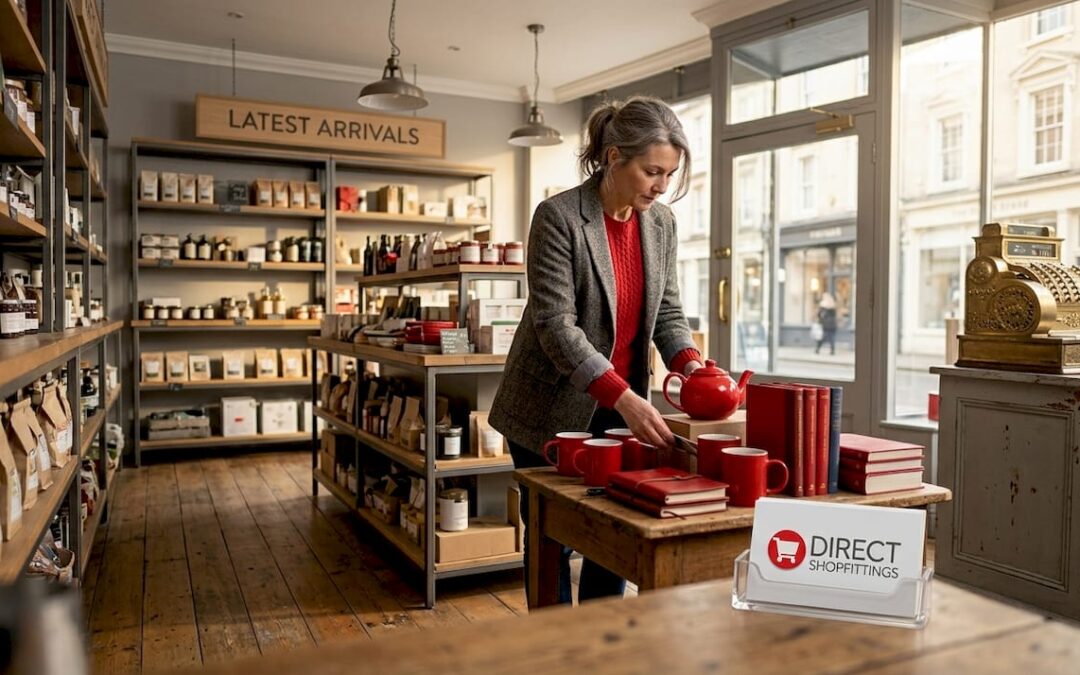
Retail display mistakes in small stores directly cost you sales, not because your products are wrong, but because of how they are presented. Visual merchandising, the professional term for how products are arranged and displayed to drive purchase decisions, is where most small retailers quietly haemorrhage revenue. Ani Nersessian of VM ID, a visual merchandising consultancy, puts it plainly: stores that treat their shelves like inventory storage rather than a showroom confuse shoppers and limit basket building. The good news is that most of these errors are fixable without a full refit.
1. Displaying products like a stock room, not a showroom
The single most damaging of all common retail display errors is treating your shop floor like a warehouse. Retail spaces that present products as inventory rather than curated selections reduce customer engagement and suppress conversion. Shoppers who cannot immediately understand what a display is about will move on.
The fix is contextual curation. Group products by use, lifestyle, or occasion rather than by supplier or category code. Add small signs that highlight a product’s key feature or benefit. Adjacency matters too: place complementary items together so customers naturally add more to their basket.
- Avoid stacking identical products floor to ceiling without any styling
- Use props, colour blocking, or themed vignettes to communicate context
- Highlight one hero product per display rather than presenting everything equally
Pro Tip: Walk your shop floor as a customer would, from the entrance inward, and ask yourself what story each display tells within three seconds. If there is no clear answer, the display needs reworking.
2. Ignoring dead spots that silently drain sales

Dead spots are areas in your store that consistently fail to generate sales. They are typically found in odd corners, behind fixtures, or in areas that customer traffic naturally bypasses. Gift Shop Magazine documented a case where front-left shelves positioned under counters were identified as a persistent dead spot, confirmed only after cross-referencing weekly sales reports.
The problem is that most small store owners do not know where their dead spots are because they have never mapped customer movement. Observation is the starting point. Stand near your entrance for 20 minutes on a busy afternoon and watch where people go and, more importantly, where they do not.
“Start with observation. Watch how customers move through your space before you move a single fixture.” Michelle Sherrier, retail merchandising consultant, as cited in Gift Shop Magazine.
Once identified, dead spots can be activated by relocating destination products there, improving lighting, or adding a compelling display that draws the eye from the main traffic path.
3. Failing to use a power wall near the entrance
The power wall is the most underused asset in small store visual merchandising. Placed near the store entrance, a power wall is designed for quick scanning, uses contrast in colour and lighting, and should be refreshed regularly to re-engage repeat visitors. Shopify’s retail guidance identifies it as the primary opportunity to influence first impressions and drive sales of high-margin or seasonal products.
Small boutiques frequently waste this prime position on generic signage, storage, or a cluttered mix of products with no visual hierarchy. A well-executed power wall uses bold contrasting colours, warm spot lighting, and a tight edit of three to five products. It tells a story in under five seconds.
- Feature your best-selling or highest-margin products
- Use warm spot lighting to draw the eye immediately upon entry
- Refresh the display at least every two to three weeks to maintain interest
Pro Tip: Treat your power wall like a shop window. If it would not stop someone walking past outside, it will not stop someone walking past inside either.
4. Missing speed bump displays that slow customer movement
Customers who move through a small store without pausing are customers who buy less. Curated speed bump displays placed strategically along customer routes slow movement, encourage browsing, and increase impulse purchases. These are not large fixtures. A single well-styled table, a tiered stand, or a floor unit placed mid-aisle can change the rhythm of how people shop your space.
The mistake most small retailers make is designing their layout purely around product categories, with no thought given to the pace of the customer journey. A gift shop, for example, might place a seasonal display table at the midpoint of its main aisle, breaking the straight-line walk to the counter and prompting customers to stop and handle products.
Speed bumps work best when they feature tactile, giftable, or impulse-friendly products. Avoid placing them with your slowest-moving lines. The goal is to create a moment of delight that interrupts the path to the till.
5. Flat, uniform shelving with no height variation
Displays that sit at a single height look sparse and uninspiring, regardless of how many products are on them. Layered height variation using risers and stacked elements creates perceived product abundance and guides the shopper’s eye across the full display. This is particularly critical in small footprint stores where you cannot rely on sheer volume to create visual impact.
The comparison below illustrates the difference clearly:
| Display approach | Customer perception |
|---|---|
| Flat, single-level shelving | Sparse, understocked, low value |
| Varied heights with risers and props | Abundant, curated, premium feel |
| Warm LED spotlighting on hero products | High-value, intentional, worth exploring |
| Overhead fluorescent only | Flat, clinical, uninviting |
Small risers, stacked books or boxes used as props, and grouped clusters of three products at different heights all contribute to a richer visual texture. Warm LED lighting directed at key products reinforces the effect.
Pro Tip: Battery-operated puck lights are inexpensive and require no wiring. Place them inside or beneath display risers to spotlight hero products without a costly electrical installation.
6. Planogram drift that erodes display effectiveness
Even a well-designed display plan deteriorates quickly in a busy small store. Planogram compliance drifts naturally due to busy trading periods, partial restocking, and shelf invasion from adjacent products. Manual audits of shelf compliance reach only 60 to 70% accuracy, and with checks happening every one to four weeks, the shelf condition is frequently out of sync with the original plan. That gap in accuracy translates directly into lost visibility for new products and reduced impact from promotional displays.
This is not a staff negligence issue. It is a systemic operational challenge. Staff restock under pressure, products get shifted, and facings get reduced without anyone noticing until a full audit is done.
- Assign one person per shift to do a five-minute shelf check against a printed planogram
- Photograph your displays after each reset so staff have a clear visual reference
- Flag any shelf invasion immediately rather than waiting for a scheduled review
Pro Tip: Print a laminated photo of each display at its best and attach it to the back of the fixture. Staff can reset to the photo in under two minutes without needing a manager.
7. Poor lighting placement that creates glare and clutter
Lighting is one of the most misunderstood elements of small store display. Lighting placement relative to the shopper’s line of sight, especially on glass display cases, is critical. Poorly positioned lights create glare and distracting reflections that make displays appear cluttered and difficult to read. Shoppers often attribute this confusion to bad product selection when the real culprit is the lighting design.
This problem is especially acute for boutiques selling perfume, jewellery, or luxury accessories in glass cabinets. The quality of the glass or acrylic matters too. Cheap cabinets distort reflections and magnify smudging, which makes even premium products look neglected.
- Position lights above and slightly behind the shopper’s eye level, not directly overhead
- Use side-mounted or angled internal cabinet lighting to illuminate products without creating reflections on the glass face
- Clean glass surfaces daily. Fingerprints and smudging are visible from three metres away and undermine the premium feel of any display
Treat lighting as part of your merchandising strategy, not an afterthought. A product that looks flat under poor lighting will outsell itself when lit correctly.
Key takeaways
Fixing retail display mistakes in small stores requires prioritising visibility, customer flow, and consistent execution over product volume or category logic.
| Point | Details |
|---|---|
| Showroom over stock room | Curate displays with context and adjacency to guide shoppers and build basket size. |
| Activate dead spots | Map customer movement and relocate destination products to underperforming areas. |
| Use height and light together | Risers and warm LED spotlighting create perceived abundance in limited space. |
| Maintain planogram discipline | Assign regular shelf checks and use photo references to prevent compliance drift. |
| Treat lighting as merchandising | Correct light placement on glass fixtures removes glare and lifts product appeal. |
What I have learned from watching small stores get this wrong
I have spent years observing how small retailers approach their shop floors, and the pattern is almost always the same. Owners invest in good stock, spend time on their social media presence, and then leave the physical store to look after itself. The displays that were set up at launch are still there six months later, slightly dishevelled, with a few gaps where products have sold and not been replaced with anything intentional.
The uncomfortable truth is that most retail layout blunders are not design failures. They are observation failures. Owners are too close to their own stores to see what a first-time customer sees. The dead spot behind the fixture near the back wall is invisible to you because you walk past it every day. To a new customer, it signals neglect.
What actually works is building a habit of standing at your entrance every Monday morning and looking at your store with fresh eyes. Ask yourself what draws your gaze, what feels crowded, and what feels empty. Then make one change. Not ten. One deliberate change, tracked against sales for two weeks. Small stores that improve their displays consistently outperform those that do occasional full resets followed by months of drift.
The stores I have seen make the biggest gains are not the ones with the biggest budgets. They are the ones whose owners treat merchandising as an ongoing discipline rather than a one-off project.
— Lee
How DirectShopfittings helps small stores display better
Correcting visual merchandising mistakes starts with having the right fixtures and fittings in place. DirectShopfittings supplies a full range of retail display equipment suited to small boutiques and independent retailers, from glass display cabinets and tiered shelving units to lighting solutions and modular shopfitting components.
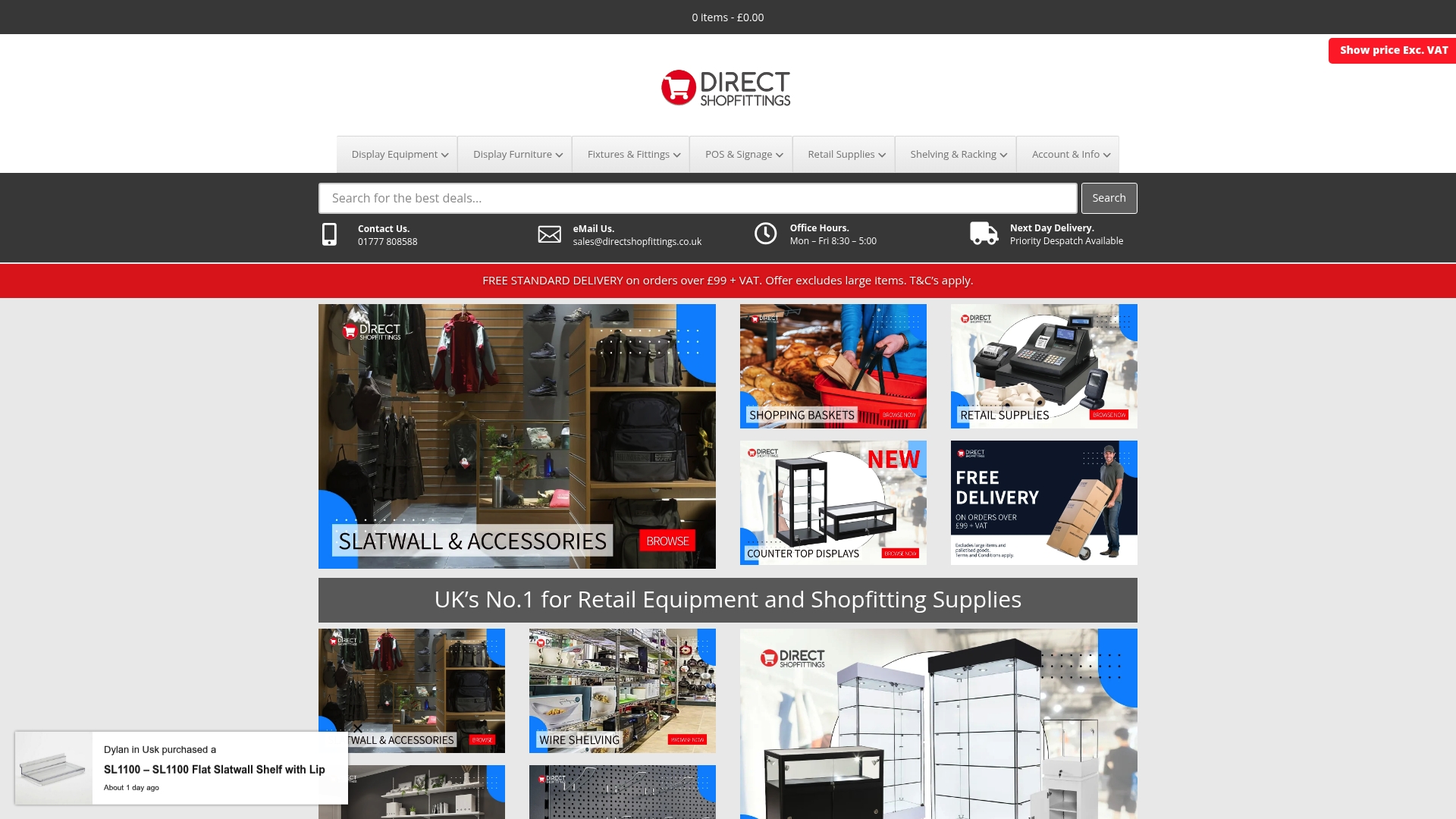
Whether you are setting up a power wall, activating a dead spot, or replacing a cabinet that is causing glare issues, DirectShopfittings sources professional-grade fixtures at competitive prices with rapid delivery. Their supplier network means hard-to-find items are available without long lead times, which matters when you are mid-refit and need a specific unit quickly. Browse the full range at DirectShopfittings to find display solutions that match your store layout and merchandising goals.
FAQ
What are the most common retail display mistakes in small stores?
The most common errors are treating displays like stock room shelving, ignoring dead spots, neglecting height variation, and placing poor lighting on glass fixtures. Each of these reduces customer engagement and suppresses conversion without the owner necessarily realising the cause.
How do I find dead spots in my small store?
Observe customer movement from your entrance for at least 20 minutes during a busy period, then cross-reference foot traffic patterns with your sales reports by shelf location. Areas with low footfall and low sales are your dead spots.
How often should I refresh my store displays?
Power walls and entrance displays should be refreshed every two to three weeks to maintain interest from repeat customers. Other displays benefit from a review at least monthly, with planogram checks assigned to a staff member on every shift.
Does lighting really affect sales in a small retail store?
Yes. Proper lighting design elevates product visibility and the perceived premium quality of a display. Poor lighting, particularly glare on glass cases, is frequently mistaken by shoppers for bad product selection when the fixture arrangement is the actual problem.
What is planogram compliance and why does it matter for small stores?
Planogram compliance means maintaining your display plan as designed, with correct product facings and positioning. Manual compliance audits reach only 60 to 70% accuracy in practice, meaning displays drift from their intended layout regularly. For small stores, this directly reduces the impact of new product launches and promotional placements.