
TL;DR:
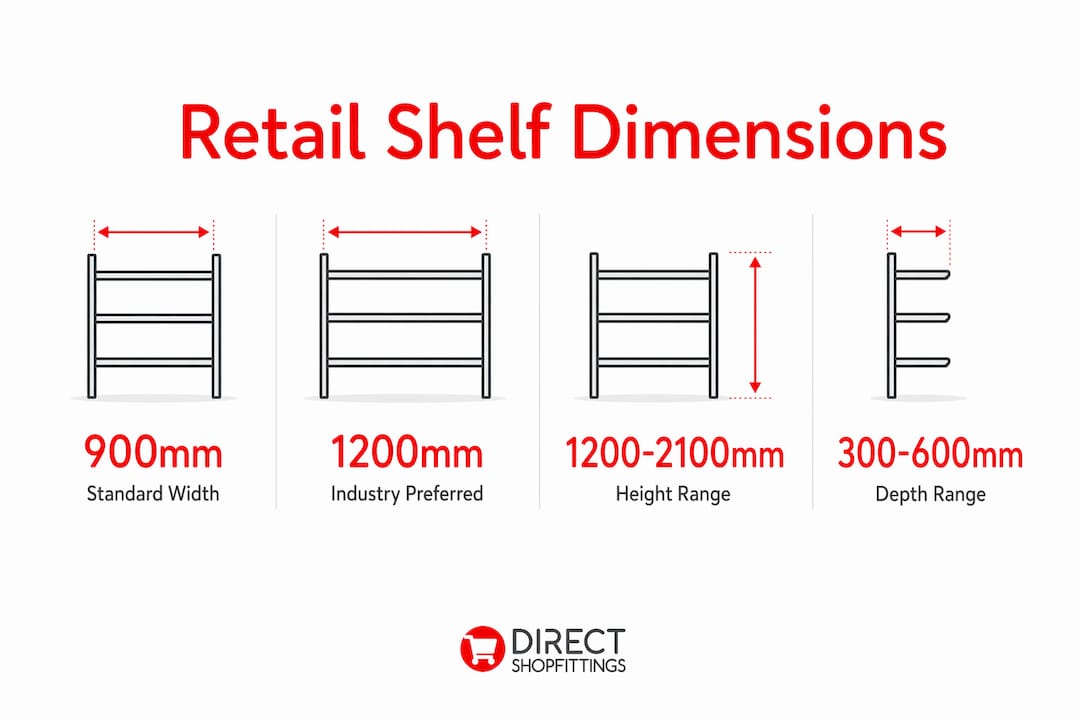
- Standard retail shelves in the UK typically measure between 900mm and 1200mm in width, 1200mm to 2100mm in height, and 300mm to 600mm in depth, optimizing product visibility and customer accessibility. Choosing the right dimensions depends on store type, product mix, and floor space, with a focus on graduated shelf depths and appropriate aisle widths for shopper flow. Correct specification at the planning stage prevents costly reconfigurations later, and suppliers like DirectShopfittings offer tailored solutions aligned with UK retail standards.
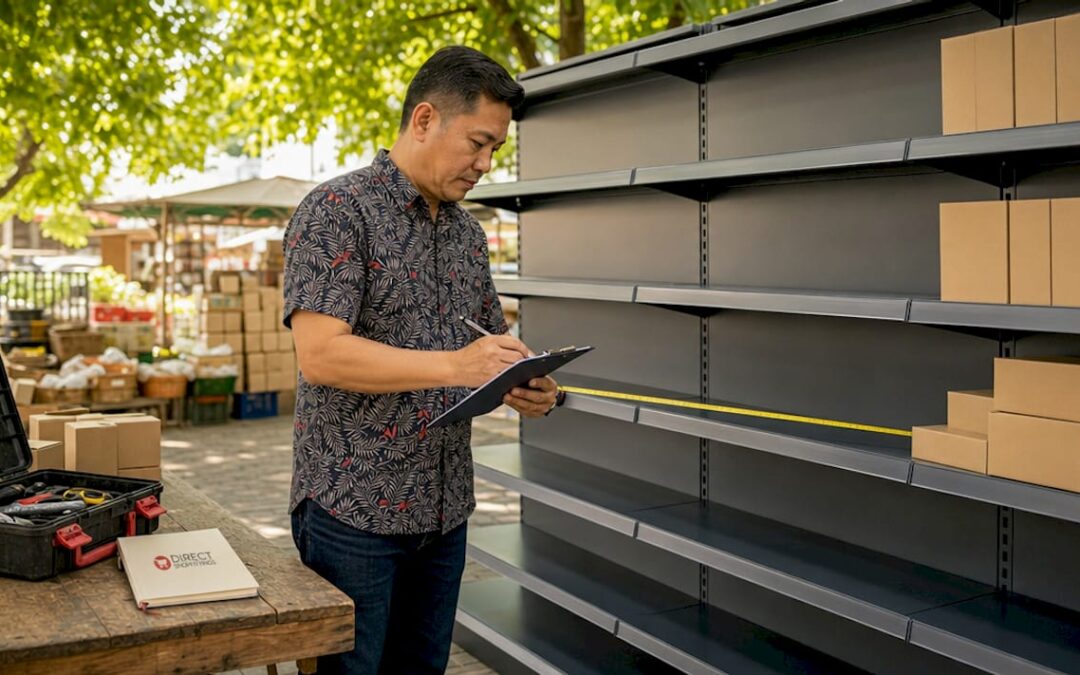
Standard retail shelf dimensions are defined by three measurements: width, height, and depth, each calibrated to maximise product visibility, stock capacity, and customer accessibility. For most UK retail settings, the accepted ranges are widths of 900mm to 1200mm, heights between 1200mm and 2100mm, and depths from 300mm to 600mm. These figures apply across the most common shelving formats, including gondola units and wall-mounted systems. Whether you are fitting out a convenience store or a grocery aisle, understanding these store shelving measurements from the outset saves you from costly reconfigurations later.
What are standard retail shelf dimensions?
Standard retail shelf dimensions refer to the width, height, and depth specifications that retailers use across gondola shelving, wall units, end caps, and wire shelving. The industry has converged on these ranges because they balance product capacity with the practical realities of customer reach, aisle clearance, and stock replenishment. Gondola shelving, the freestanding double-sided unit found in most supermarkets and convenience stores, is the reference point for most retail shelf size standards. Wall units follow similar logic but extend taller, since they do not obstruct sightlines across the shop floor.
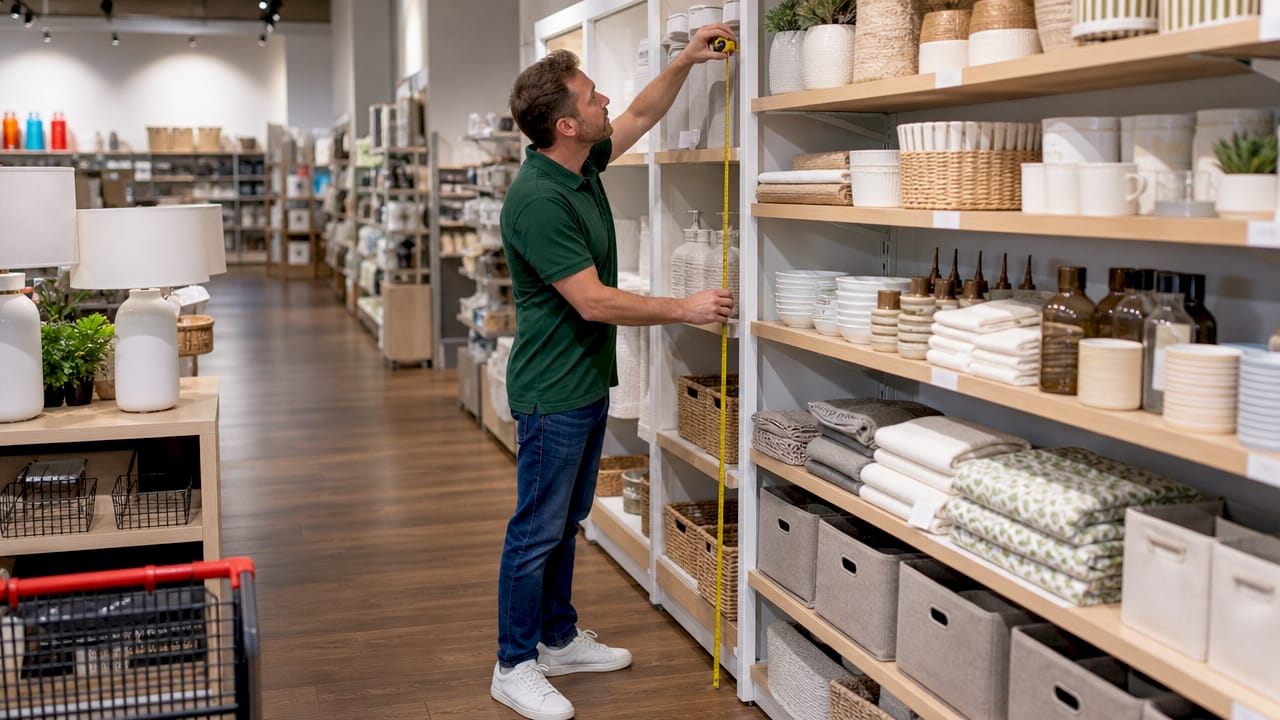
The three dimensions work together. A shelf that is the right width but too deep will push products out of easy reach. A unit that is the correct depth but too tall will create dead zones at the top that customers ignore. Getting all three right is what separates a display that sells from one that simply stores.
What are the most common retail shelf widths and why do they matter?
Standard gondola shelving widths are primarily 900mm and 1200mm, with 1200mm (48 inches) recognised as the industry standard for grocery aisles. The 900mm width suits tighter shop floors where aisle clearance is limited, while 1200mm gives you more product facings per bay and supports higher inventory volume. For most small retailers, the choice between these two comes down to floor area and the number of product lines you need to display.
Width also affects structural performance. Shorter 900mm shelves handle higher point loads with less deflection than longer spans, making them the better choice for heavy items such as canned goods, bottled drinks, or hardware. If your product mix is light and varied, 1200mm bays give you the display flexibility to group products logically and create clear visual sections.
Key considerations when selecting shelf width:
- 900mm bays suit compact stores, corner shops, and any layout where aisle width is under 1000mm
- 1200mm bays are the standard for grocery, pharmacy, and general merchandise retailers with wider floor plans
- Double-sided gondola units use the same width measurement but serve two aisles simultaneously, effectively doubling the display return per bay
- Single-sided wall units are available in widths from 665mm to 1250mm, giving more flexibility for perimeter shelving
Pro Tip: If you are fitting out a new store, start with 1200mm bays as your default and switch to 900mm only where a specific aisle or alcove demands it. Mixing widths without a plan creates an inconsistent look and complicates future reconfigurations.
How to choose the right shelf height for different retail needs
Retail gondola heights commonly range from 1200mm to 2100mm, with the 1500mm to 1800mm range considered optimal for balancing storage capacity with customer reach. Taller units maximise stock on the shop floor but create sightline problems and make the top shelves inaccessible to many shoppers. Shorter units preserve open sightlines and are easier to shop, but reduce the number of shelf levels available.
The right height depends heavily on your store type. Here is how the standard heights break down by retail context:
| Store type | Typical gondola height | Rationale |
|---|---|---|
| Supermarket | 1800mm to 2100mm | Maximises stock density in high-volume environments |
| Convenience store | 1200mm to 1500mm | Preserves sightlines and aids loss prevention |
| Pharmacy | 1500mm to 1800mm | Balances accessibility with product range depth |
| Boutique or gift shop | 1200mm to 1600mm | Supports open, browsable display environments |
| Wall units (all types) | 1400mm to 3000mm | Perimeter position allows taller units without blocking floor sightlines |
Convenience store shelving at around 1200mm improves sightlines and customer interaction compared to taller supermarket units. This is not just about aesthetics. A shorter unit means staff can see across the entire shop floor from a single position, which directly supports loss prevention without requiring additional security infrastructure.
Accessibility is the other factor. The comfortable reach zone for most adults sits between 500mm and 1700mm from the floor. Products placed above 1700mm are technically reachable but are rarely browsed without deliberate effort. Placing your best-selling or highest-margin products within the 900mm to 1500mm band is one of the simplest ways to lift sales without changing your range.
Pro Tip: For stores serving older customers or those with mobility considerations, keep your primary product range below 1500mm. This aligns with UK accessibility best practice and reduces the risk of products being overlooked simply because they are out of comfortable reach.
Standard shelf depth: sizing for product types and visibility
Shelf depth is the dimension most retailers underestimate. Standard depths run from 300mm to 600mm, with base shelves typically deeper than upper shelves to improve product visibility and prevent items at the back from disappearing behind those at the front. The standard practice is to make upper shelves 50mm to 100mm shallower than the base shelf on the same unit.
This graduated depth pattern matters because a 600mm deep upper shelf forces customers to lean in to see products at the rear. A 400mm or 450mm upper shelf keeps everything within easy sightline and reach. The difference in display effectiveness is significant, particularly for packaged goods where the front-facing label does the selling.
Depth recommendations by product category:
- Packaged dry goods and cereals: 300mm to 400mm upper shelves, 400mm to 500mm base
- Canned and jarred goods: 400mm to 500mm across all levels, with base at 500mm to 600mm for multi-row stacking
- Bulk or large-format items: 500mm to 600mm base shelf, with upper shelves reduced to 400mm maximum
- Chilled and ambient beverages: 400mm to 500mm, with sloped shelf inserts to bring products forward as stock depletes
For double-sided gondola units, the base shelf depth on each side typically runs to 500mm or 600mm, giving a total unit depth of around 1000mm to 1200mm including the central spine. This is the figure you need when calculating how many gondola runs fit across your shop floor.
Retail shelving layout: how shelf dimensions relate to aisle width and store flow
Shelf dimensions do not exist in isolation. The total footprint of your shelving directly determines how much aisle space remains, and aisle space is what makes a store feel open and easy to shop. Recommended retail aisle widths in UK settings are 900mm to 1200mm for comfortable customer movement and accessibility compliance. Narrower aisles create congestion, particularly during peak trading hours, and can conflict with UK building regulations for means of escape.
Follow this sequence when planning your shelving layout:
- Measure your total floor area and subtract the space required for the till point, entrance zone, and any fixed features such as pillars or service counters.
- Decide on your gondola run length based on the number of product lines you need to display. Each 1200mm bay holds roughly 3 to 5 product categories depending on shelf levels.
- Calculate aisle widths by dividing the remaining floor width between gondola runs. Aim for a minimum of 900mm per aisle, with 1100mm to 1200mm preferred for main thoroughfares.
- Check compliance with UK accessibility guidelines, which require adequate clearance for wheelchair users and pushchairs on primary circulation routes.
- Use Starter and Adder units to extend gondola runs cost-efficiently. A Starter unit includes uprights on both ends; Adder units share the upright from the adjacent Starter, reducing material cost without sacrificing structural integrity.
Aisle width also affects shopper behaviour. Stores with adequate clearance experience fewer congestion issues and improved shopper throughput, which translates directly into more time spent browsing and higher average basket values. A cramped aisle is not just uncomfortable. It is a commercial problem.
Comparison of popular retail shelf types and their standard measurements
Different shelving formats serve different functions, and each has its own dimension standards. The table below summarises the key measurements for the four most common types used in UK retail.
| Shelf type | Width range | Height range | Depth range | Typical use |
|---|---|---|---|---|
| Gondola (double-sided) | 900mm to 1200mm | 1200mm to 2100mm | 300mm to 600mm per side | Supermarkets, convenience stores, general merchandise |
| Wall unit (single-sided) | 665mm to 1250mm | 1400mm to 3000mm | 300mm to 500mm | Perimeter display, specialist retail, boutiques |
| End cap | 600mm to 1200mm | 1200mm to 2100mm | 300mm to 600mm | Promotional display at aisle ends |
| Wire shelving | 450mm to 1200mm | 1200mm to 1800mm | 300mm to 600mm | Stockrooms, chilled display, bakery sections |
End cap dimensions typically match the main gondola run in height and depth, which keeps the visual line consistent across the shop floor. The width is usually narrower, at 600mm to 900mm, because end caps sit at the terminus of an aisle rather than within it. Wall shelving units are available in fixed widths of 665mm, 800mm, 1000mm, and 1250mm, with heights extending to 3000mm for high-ceiling retail environments.
Wire shelving is worth a separate mention. It is the standard format for stockrooms and chilled display sections, and its open structure allows air circulation that solid-shelf units cannot provide. The dimension ranges overlap with gondola shelving, but shorter wire shelf spans are preferable for heavy loads because they deflect less under weight. For a stockroom holding bulk canned goods or bottled water, 450mm to 600mm wide wire shelves at 400mm to 500mm depth are the practical standard.
Key takeaways
Selecting the right retail shelf dimensions requires matching width, height, and depth to your store type, product mix, and available floor area.
| Point | Details |
|---|---|
| Standard width range | Widths of 900mm to 1200mm cover most UK retail formats, with 1200mm as the grocery standard. |
| Height by store type | Convenience stores suit 1200mm to 1500mm units; supermarkets use 1800mm to 2100mm for stock density. |
| Graduated shelf depth | Upper shelves should be 50mm to 100mm shallower than base shelves to maintain product visibility. |
| Aisle clearance | Maintain 900mm to 1200mm aisle widths to meet UK accessibility guidelines and support shopper flow. |
| Shelf type selection | Match gondola, wall unit, end cap, or wire shelving to the specific function and position in your store. |
Why I always start with depth, not height
Most store owners I speak with obsess over shelf height first. It is the most visible dimension and the one that shapes the look of the shop floor. But in my experience, depth is the decision that causes the most problems when it is wrong. A shelf that is 50mm too deep on the upper levels creates a display where products hide behind each other, staff spend more time facing up, and customers consistently miss items they would otherwise have bought.
The graduated depth principle, shallower upper shelves and deeper base shelves, is not complicated, but it is routinely ignored when retailers buy shelving based on price alone rather than specification. I have seen shops refit their entire upper shelf run within 18 months of opening because the original depth made the display unworkable. That is an avoidable cost.
The other thing worth saying directly: do not let a supplier talk you into the tallest unit that fits your ceiling height. Taller units look impressive in a showroom. In a small store, they create a warehouse feel that works against the browsable, approachable atmosphere that independent retailers depend on. A 1600mm to 1800mm gondola in a shop with a 2400mm ceiling leaves breathing room and keeps the space feeling open. That matters more than the extra shelf level you gain by going to 2100mm.
If you are fitting out a store for the first time, read the gondola shelving setup guide before you commit to any dimensions. Getting the specification right at the planning stage costs nothing. Getting it wrong costs a refit.
— Lee
How DirectShopfittings can help you get the dimensions right
DirectShopfittings supplies the full range of retail shelving formats discussed in this article, from standard gondola units and wall shelving to end caps and wire shelving, all sized to UK retail norms. Whether you are opening a new store or reconfiguring an existing one, the team at DirectShopfittings can help you match shelf specifications to your floor plan and product range. Their supplier network means hard-to-find sizes and configurations are sourced quickly, saving you time and avoiding the delays that derail fit-out schedules. Browse the retail shelving buyers guide for a full overview of available types and sizes, or visit DirectShopfittings to explore the complete range of shopfitting equipment suited to standard UK store dimensions.
FAQ
What is the standard height for retail shelving in the UK?
Standard retail shelving in the UK ranges from 1200mm to 2100mm in height. Convenience stores typically use 1200mm to 1500mm units, while supermarkets use 1800mm to 2100mm to maximise stock density.
How deep should retail shelves be?
Retail shelf depths run from 300mm to 600mm, with base shelves deeper than upper shelves. Upper shelves are typically 50mm to 100mm shallower than the base to keep products visible and within easy reach.
What width are standard gondola shelving units?
Gondola shelving units are most commonly 900mm or 1200mm wide. The 1200mm width is the grocery industry standard; 900mm suits smaller stores or tighter aisle configurations.
How wide should retail aisles be?
Retail aisles in UK stores should be 900mm to 1200mm wide to allow comfortable customer movement and meet accessibility requirements. Main thoroughfares benefit from the full 1200mm clearance.
What are end cap shelf dimensions?
End cap shelves typically match the main gondola in height (1200mm to 2100mm) and depth (300mm to 600mm), but are narrower at 600mm to 1200mm wide, as they sit at the end of an aisle rather than within it.