

TL;DR:
- A retail store needs at least nine core shopfitting supply categories, including fixtures, signage, and security equipment. Proper planning and material selection of fixtures ensure a professional environment and prevent costly mistakes before opening. Prioritizing operational needs and inspecting all items before launch supports a smooth and successful store opening.
Your essential shopfitting supplies list is the foundation of every successful retail store. Shopfitting, the professional term for equipping a retail space with fixtures, fittings, and operational tools, covers far more than shelving and signage. A fully equipped store requires at least nine core categories of supplies, from POS hardware and checkout tools to display furniture, cleaning kits, and security equipment. Getting this list right before opening day saves time, money, and the kind of last-minute chaos that derails new businesses. This guide walks you through every category you need.
1. The core categories every shopfitting supplies checklist must cover
Shopfitting supplies are distinct from your merchandise. They are the operational and display infrastructure that makes selling possible. Treating them as an afterthought is one of the most common and costly mistakes new retailers make.
The nine core categories are:
- POS systems — till hardware, card readers, receipt printers, and cash drawers
- Checkout supplies — carrier bags, tissue paper, gift boxes, and tape dispensers
- Display fixtures and furniture — rails, shelves, tables, mannequins, and dump bins
- Signage — window graphics, price tickets, promotional banners, and directional signs
- Cleaning equipment — mops, vacuum cleaners, glass cleaner, and surface sprays
- Security equipment — CCTV cameras, EAS tagging systems, and mirrors
- Employee supplies — staff lockers, back-office furniture, and uniform storage
- Marketing materials — loyalty cards, business cards, and leaflet holders
- Storage solutions — stockroom shelving, trolleys, and packing benches
Pro Tip: Prioritise your POS system and security equipment first. Both directly affect your ability to trade and protect stock from day one.
2. Display rails and garment hanging systems
Rails are the backbone of any clothing or accessories retailer. Single-tier rails suit high-volume hanging; double-tier rails double your capacity in the same floor space. Round rails work well for browsing, while straight rails suit structured, linear layouts.
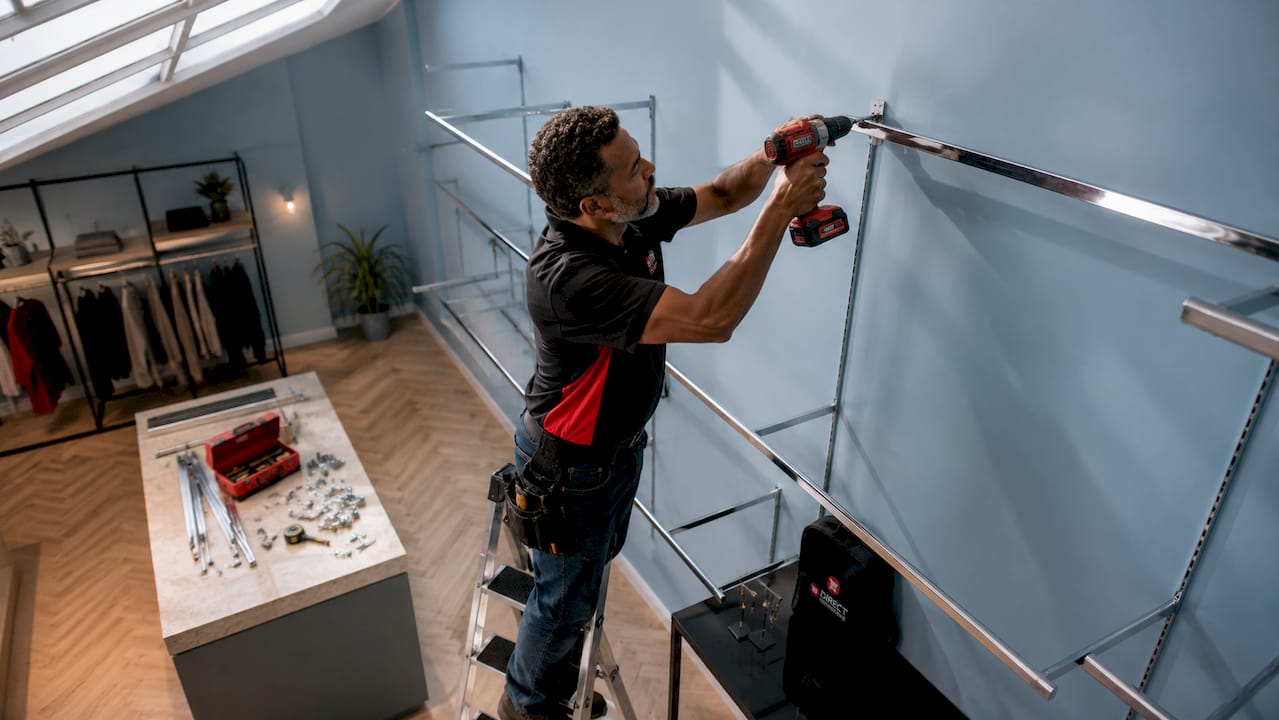
Powder-coated steel rails offer the best durability for busy shops. Chrome rails look sharp but require more cleaning to maintain their finish, which matters if you have a small team. Choose your finish based on how much time you can realistically dedicate to maintenance, not just how it looks on day one.
3. Shelving units and wall-mounted systems
Shelving is the most versatile fixture in any store. Wall-mounted shelving frees up floor space and draws the eye upward, making a small shop feel larger. Gondola shelving works well in the centre of the floor for supermarkets and convenience stores.
Shelving suits product comparison better than any other fixture type. Customers can scan options side by side without picking items up. For new retailers, adjustable shelving systems are worth the investment because your product range will change and fixed shelves become a problem quickly.
Pro Tip: Buy shelving with adjustable bracket positions. Your product mix will evolve in the first six months, and fixed shelves will cost you more to replace than the saving you made upfront.
4. Display tables, dump bins, and basket units
Display tables suit folded products and layered storytelling, while dump bins and basket units create promotional urgency. Each fixture type serves a specific merchandising goal. Mixing fixture types incorrectly, such as placing premium products in a dump bin, damages your brand and confuses customers.
Tables work best near the entrance for seasonal or promotional displays. Dump bins belong in high-traffic zones for clearance or impulse buys. Wicker and wire baskets suit accessories and small items that benefit from a tactile, browse-friendly presentation.
5. Mannequins and dress forms
Mannequins are one of the highest-return fixtures a clothing retailer can buy. A well-dressed mannequin in a window increases footfall and communicates your brand aesthetic without a word of copy. Abstract mannequins with no facial features suit contemporary fashion; realistic mannequins work better for traditional or family clothing retailers.
Dress forms are cheaper and work well for knitwear, tailoring, and accessories. Both options require a stable base and enough floor space to be visible from the entrance. Budget for at least two to three mannequins before opening day.
6. Fixture materials: what to choose and why
Fixture material selection directly affects your maintenance costs and long-term return on investment. The four most common materials are steel, wood, glass, and acrylic. Each has a different profile for durability, cleaning, and visual impact.
| Material | Durability | Cleaning effort | Best suited for |
|---|---|---|---|
| Powder-coated steel | High | Low | High-traffic stores, clothing, hardware |
| Solid wood | Medium | Medium | Boutiques, gift shops, premium retail |
| Glass | Medium | High | Jewellery, cosmetics, electronics |
| Acrylic | Medium | Low | Accessories, point-of-sale displays |
Fixture material selection critically affects return on investment and maintenance costs. Choose materials that match your foot traffic and your team’s cleaning capacity, not just your visual preferences. A glass showcase looks excellent but demands daily attention to stay presentable.
Pro Tip: Request physical samples of any fixture material before ordering in bulk. Colours, finishes, and thicknesses often differ from catalogue images, and a sample costs far less than a wrong order.
7. Signage and price ticketing systems
Signage is the silent salesperson in your store. Clear, well-placed signs reduce the number of questions staff field and guide customers through your layout without friction. Every retailer needs window graphics, internal directional signs, price ticket holders, and promotional banner stands as a minimum.
Price ticketing systems range from simple card holders clipped to shelves to electronic shelf labels. For new retailers on a budget, printed card holders with a consistent font and colour scheme are perfectly effective. The key is consistency. Mismatched signage reads as disorganised and undermines customer confidence in your brand.
8. POS systems and checkout supplies
Your point-of-sale system is the most operationally critical item on any shopfitting supplies checklist. It processes every transaction, tracks your stock, and generates the sales data you need to make buying decisions. Choose a system that integrates with your stock management software from the start.
Checkout supplies sit alongside your POS and are easy to underestimate. You need carrier bags in multiple sizes, tissue paper for fragile items, gift boxes, tape, scissors, a label printer, and a cash float. Run out of bags on a busy Saturday and you will feel it. Order more than you think you need for the first month.
9. Security equipment for small retailers
Security is non-negotiable for any retail store. CCTV cameras deter theft and provide evidence when incidents occur. EAS (Electronic Article Surveillance) tagging systems, the hard tags and pedestals you see in clothing stores, significantly reduce shoplifting. Convex mirrors placed in blind spots give staff visibility across the whole floor.
For small retailers, a basic CCTV system and EAS pedestals at the entrance cover most risk. Retail store security equipment should be installed and tested before your first trading day. Retrofitting security after opening is disruptive and more expensive.
10. Storage solutions and stockroom equipment
Your stockroom is as important as your shop floor. Without organised storage, replenishment slows down, stock gets damaged, and staff waste time searching for items. The core stockroom kit includes heavy-duty shelving units, stock trolleys, a packing bench, and labelling equipment.
Storage shelving should be adjustable and rated for the weight of your stock. A stock trolley lets one person move multiple boxes safely, which matters when you are a small team. Keep your stockroom layout logical: fast-moving lines near the door, slow-moving stock further back.
11. Cleaning and maintenance supplies
A clean store is a professional store. Cleaning supplies are operational necessities, not optional extras. Your minimum kit covers a commercial mop and bucket, a vacuum cleaner, glass cleaner, surface spray, bin liners, and a window squeegee.
Schedule cleaning into your daily opening and closing routine rather than reacting to mess. Fixtures collect dust quickly, particularly glass and acrylic surfaces. A consistent cleaning routine protects your fixture investment and keeps the shop floor looking its best for every customer.
12. Employee and back-office supplies
Staff need a functional workspace to perform well. Back-office supplies include a staff locker or secure storage area, a break room table and chairs, a notice board, and basic stationery. These items are often left off the shopfitting supplies checklist until the last moment.
A well-organised back office reduces stress and improves staff retention. It also keeps personal items off the shop floor, which maintains a professional appearance. Budget for back-office furniture at the same time as your customer-facing fixtures, not as an afterthought.
13. How to choose shopfitting supplies wisely
New retailers often seek quotes before defining their project scope. This creates confusion, delays, and mismatched orders. Define your store layout, fixture types, and material preferences before contacting any supplier.
Follow this process:
- Map your floor plan and identify zones: entrance, browsing, checkout, stockroom.
- List fixtures by zone with approximate quantities and dimensions.
- Select materials based on foot traffic, cleaning capacity, and brand aesthetic.
- Request physical samples before committing to bulk orders.
- Verify supplier production evidence including drawings, tolerances, and packing plans.
- Confirm delivery timelines and align them with your fitout schedule.
- Inspect all items on arrival before installation begins.
Shopfitting buyers should seek concrete production evidence such as drawings, tolerances, and after-sales protocols to avoid costly mistakes. Supplier communication quality matters more than price alone. A cheap fixture that arrives in the wrong size or finish costs more to fix than the saving you made.
14. Opening day readiness checklist
A commercial fitout involves a 3–6 month preparation phase with statutory approvals, procurement scheduling, and installation sequencing. For small retailers, a condensed version of this process still applies.
- Confirm all fixtures are ordered with agreed delivery dates.
- Complete the services rough-in phase (electrics, plumbing, data cabling) before installation begins.
- Install wall-mounted systems and heavy fixtures first.
- Install freestanding fixtures and display furniture second.
- Set up POS systems, card readers, and receipt printers.
- Install signage, price ticket holders, and window graphics.
- Set up security equipment and test all cameras and EAS pedestals.
- Stock and dress the shop floor.
- Inspect every fixture for damage, stability, and alignment.
- Brief all staff on layout, replenishment routes, and security procedures.
Pro Tip: Book a full inspection walk-through 48 hours before opening. This gives you time to fix any issues without the pressure of an imminent launch.
Key takeaways
A fully equipped retail store requires at least nine core supply categories, and getting procurement right before opening day prevents costly delays and last-minute substitutions.
| Point | Details |
|---|---|
| Nine core categories | Cover POS, checkout, display, signage, cleaning, security, staff, marketing, and storage before opening. |
| Material choice matters | Match fixture materials to your foot traffic and cleaning capacity to protect long-term investment. |
| Define scope before quoting | Map your floor plan and fixture list before approaching any supplier to avoid mismatched orders. |
| Sequence your fitout correctly | Complete services rough-in before installing fixtures to prevent expensive remedial work. |
| Inspect before opening | Walk the full store 48 hours before launch to catch damage, alignment issues, and missing items. |
What I have learned about shopfitting supply decisions
The most expensive mistake I see new retailers make is treating shopfitting as a shopping exercise rather than a business decision. You are not buying furniture. You are building a sales environment. Every fixture placement, every material choice, and every signage decision influences how customers move through your store and what they pick up.
Well-selected fixtures enhance brand identity and customer flow, driving conversion. That is not a marketing claim. It is a practical reality. A boutique that uses powder-coated steel rails and bare plywood shelving sends a very different message to one that uses warm wood and soft lighting, even if the stock is identical.
My honest advice: spend more time on your fixture plan than your opening promotion. Customers forgive a quiet launch. They do not forgive a store that is hard to navigate or looks unfinished. Get the physical environment right first, then market it.
The other thing I would tell every startup retailer: do not skip the sample stage. Physical prototypes and material samples prevent errors in size, colour, and finish before you commit to a full order. I have seen retailers receive an entire fixture order in the wrong finish because they approved a digital render instead of a physical sample. That mistake costs thousands and weeks of delay.
— Lee
How DirectShopfittings helps small retailers get equipped
DirectShopfittings supplies the full range of shopfitting essentials that small retailers and new startups need, from retail shelving and storage to display fixtures, checkout equipment, and security solutions. Their supplier network sources hard-to-find items quickly, which matters when your opening date is fixed and substitutions are not an option.
For retailers who are still building their fixture plan, the store opening equipment guide on the DirectShopfittings website covers every category in detail. The team is available to advise on quantities, materials, and delivery scheduling. Browse the full range at DirectShopfittings or get in touch directly for tailored support on your project.
FAQ
What is included in a shopfitting supplies list?
A shopfitting supplies list covers display fixtures, shelving, signage, POS hardware, checkout supplies, cleaning equipment, security systems, storage solutions, and staff supplies. These are the operational and display items that equip a retail space for trading.
How early should I order shopfitting supplies?
Order shopfitting supplies at least 3–6 months before your planned opening date. This allows time for statutory approvals, supplier lead times, sample approvals, and installation scheduling without last-minute delays.
What display fixtures do small retailers need most?
Small retailers need rails or shelving suited to their product type, a display table for promotions, price ticket holders, and at least one or two mannequins or dress forms if selling clothing. The exact mix depends on your product category and floor plan.
How do I choose the right fixture material?
Choose fixture materials based on your foot traffic and cleaning capacity. Powder-coated steel suits high-traffic stores; wood suits boutiques; glass and acrylic suit premium product displays but require more frequent cleaning.
What is the difference between shopfitting supplies and merchandise?
Shopfitting supplies are the fixtures, tools, and equipment that make selling possible, such as shelving, signage, and POS systems. Merchandise is the stock you sell. Budgeting for both separately prevents underspending on the store environment.