
TL;DR:
- Choosing the right menu display stand depends on your venue’s location, update frequency, and brand image to maximize customer engagement. Different formats like A-frames, acrylic holders, and digital screens serve specific purposes and work best when combined strategically across customer touchpoints. Consistent updates and matching stand types to their environments significantly enhance menu visibility, customer experience, and branding effectiveness.
A menu display stand is a purpose-built holder or board that presents your menu, promotions, or product information to customers at the point of decision. The right stand type determines whether a customer pauses, reads, and orders, or walks past without engaging. From freestanding A-frames on busy pavements to sleek tabletop acrylic holders on restaurant tables, the variety of options available means there is a format suited to every venue, budget, and update schedule. This guide covers the most practical types of menu display stands for retailers and restaurant owners, with direct comparisons to help you choose wisely.
Types of menu display stands: the full range
Common stand types include wall-mounted boards, freestanding A-frames, tabletop acrylic holders, window displays, hanging signs, chalkboards, poster frames, countertop displays, and digital boards. Each format suits a different placement, whether that is a wall, window, pavement, table, counter, or entrance. Understanding the core differences in material, visibility, and update speed is what separates a good purchase from a wasted one.
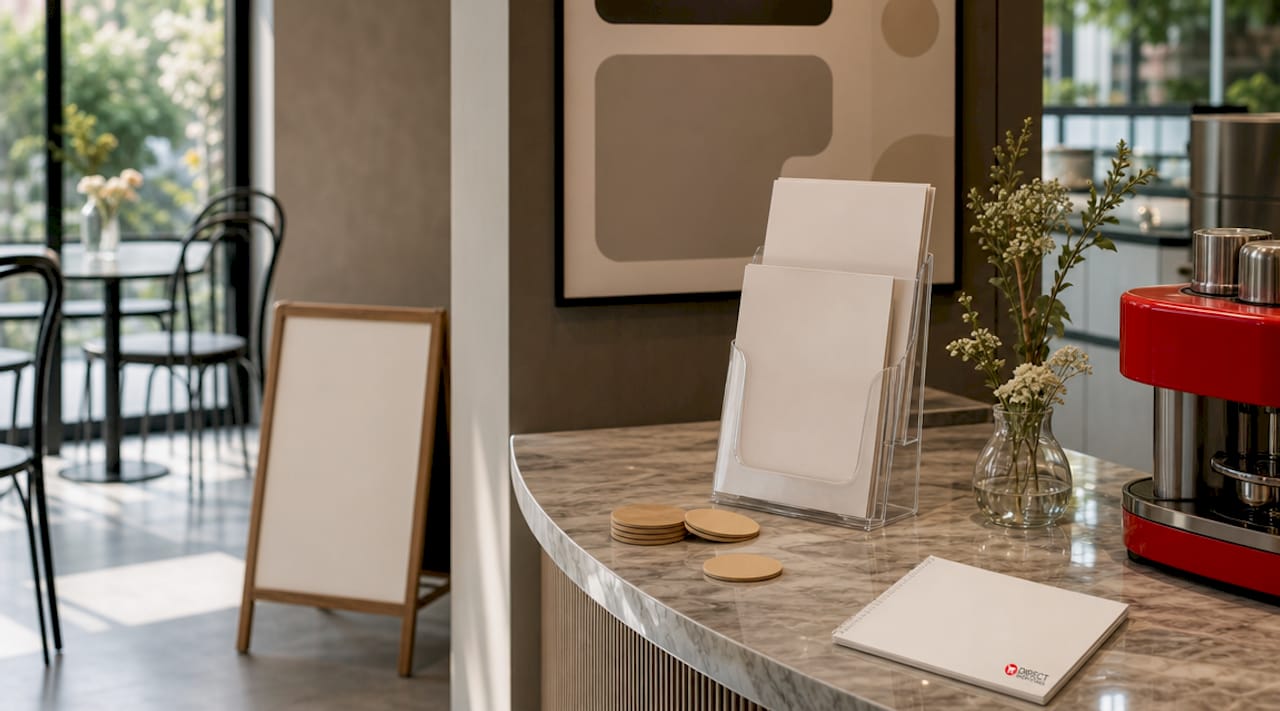
The industry term for this product category is “menu display stands” or “menu holders,” though you will also hear “menu boards” and “sign holders” used interchangeably depending on the context. Below is a breakdown of the most widely used formats, with guidance on where each one performs best.
Pro Tip: Before purchasing, map out every customer touchpoint in your venue, from the entrance to the table to the counter. A stand that works brilliantly at the door may be entirely wrong at the table.
1. Freestanding A-frame stands
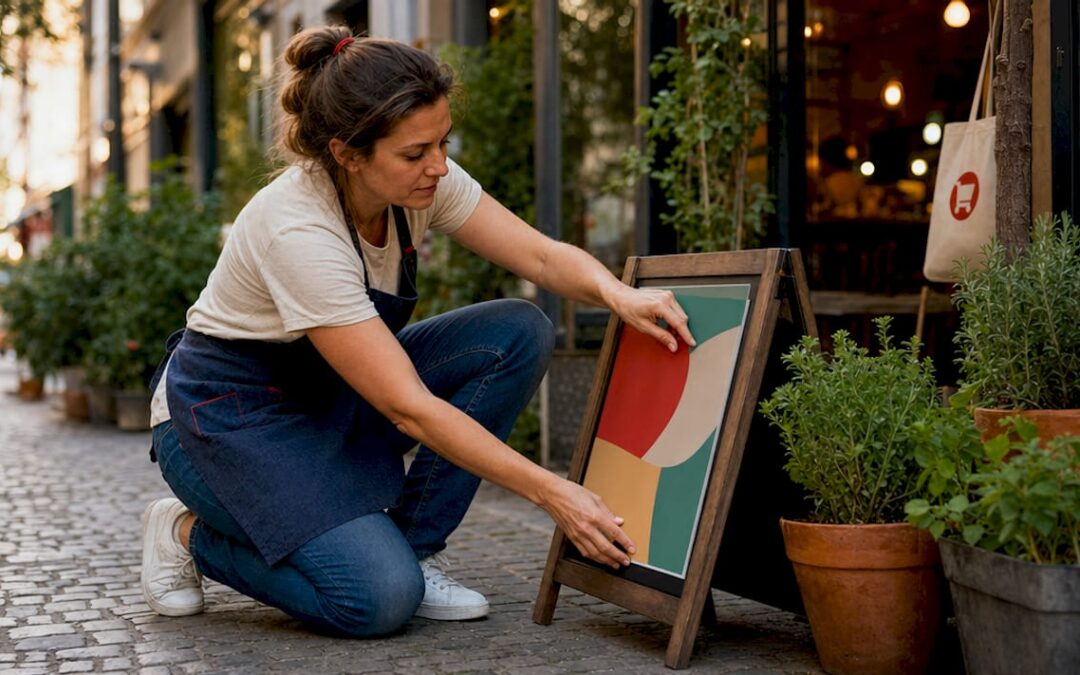
A-frames are double-sided pavement displays designed for high foot-traffic locations outside cafés, restaurants, and retail shops. The snap-frame mechanism allows staff to swap posters in under a minute without any tools, making them ideal for daily specials and impulse promotions. A standard A1 A-frame weighs approximately 5.5 kg, which gives it enough stability on a pavement without being difficult to move indoors at closing time.
The double-sided design means passing pedestrians see your message from both directions, doubling the exposure of a single poster. A-frames work particularly well for quick-service restaurants, bakeries, and retail shops that change their promotions frequently. If your message changes daily, this format pays for itself quickly through the time saved on reprinting and repositioning.
2. Freestanding aluminium menu stands
Aluminium freestanding stands are the more refined cousin of the A-frame, designed for sheltered outdoor areas, restaurant entrances, and hotel lobbies. A standard A4 aluminium stand adjusts in height up to 1,250 mm and tilts up to 90 degrees for optimal readability at different viewing angles. The weighted base keeps the stand stable in light wind and busy foot-traffic areas without needing to be fixed to the floor.
The A3 version measures 1,310 mm tall and weighs 6.7 kg, with a quick-change snap frame that requires no tools to update. These stands suit venues where presentation matters as much as function, such as fine dining restaurants, hotel restaurants, and upmarket retail boutiques. The brushed aluminium finish reads as professional and durable, which reinforces brand credibility at the entrance.
Pro Tip: For sheltered outdoor use, choose an aluminium stand with a weighted base rather than a wall-mounted bracket. The flexibility to reposition it during service is worth more than a fixed installation.
3. Tabletop acrylic menu holders
Tabletop acrylic holders are the most widely used indoor menu display format in restaurants, cafés, and retail counters. They come in two primary configurations: the slanted L-shape, which suits counters and desks, and the double-sided T-shape, which is designed for dining tables where customers sit on both sides. Slanted acrylic holders reduce overhead light glare and position information at a natural reading angle, which makes them easier to read without picking up.
The T-shape format solves a specific problem in table service: both diners at a two-person table can read the menu simultaneously without rotating the stand. Insert swapping on both formats takes seconds, using either a slide or a drop-in opening. This makes them practical for venues that update their menus weekly or run rotating specials.
Slanted and double-sided acrylic stands serve distinct purposes depending on sightlines and customer positioning. A slanted holder on a counter discourages customers from picking up and handling the menu, which improves hygiene and reduces wear on printed inserts. For retail counters displaying product information or pricing, the L-shape is the more practical choice.
Pro Tip: Use a matte laminate on your printed inserts rather than gloss. Gloss paper inside an acrylic holder amplifies glare under ceiling spotlights, which is the single most common complaint about tabletop menu displays in restaurants.
4. Wall-mounted menu boards
Wall-mounted boards fix directly to a wall surface and work well in spaces where floor and counter space is limited. They are common in quick-service restaurants, takeaways, and retail shops where customers queue and read the menu while waiting. The fixed position means the display is always visible from a consistent angle, which suits venues with predictable customer flow patterns.
Materials range from printed foam board in a snap frame to chalkboard panels and digital screens. Snap-frame wall mounts allow fast poster changes without removing the frame from the wall, which is a practical advantage in busy service environments. For venues with a static menu that rarely changes, a printed foam board insert in a fixed frame is the most cost-effective solution.
5. Chalkboard menu stands
Chalkboard stands, available in both freestanding and tabletop formats, are a popular choice for independent cafés, delis, and artisan retailers. The A4 oak tabletop chalkboard format is particularly effective for daily specials, seasonal dishes, and handwritten promotions that benefit from a personal, informal tone. The handwritten aesthetic signals freshness and individuality, which resonates strongly with customers in independent hospitality venues.
The practical advantage of chalkboards is that updates require no printing, no laminating, and no waiting. A staff member with chalk or a chalk pen can change the entire display in under two minutes. The limitation is legibility at distance and in low light, so chalkboards work best as close-range table or counter displays rather than entrance boards.
6. Countertop and point-of-sale display stands
Countertop stands sit directly on a service counter or retail display surface and are designed to catch the eye of customers who are already at the point of purchase. They are used for upselling, promoting add-ons, displaying pricing, and highlighting loyalty programmes. The compact footprint makes them suitable for venues where counter space is at a premium.
Common formats include single-pocket acrylic holders, multi-tier leaflet dispensers, and small snap-frame poster holders. For retail environments, counter display stands placed at the till point are one of the highest-return display investments available, because the customer is already committed to a transaction and receptive to additional information. Choosing the right height and angle for the counter surface is the key variable that determines whether the display gets read or ignored.
7. Window display stands and hanging signs
Window displays and hanging signs use the venue’s glazing or ceiling as a display surface, which frees up floor and counter space entirely. Suction-cup window holders and hanging banner frames are common in retail shops, cafés, and fast-food outlets where the window is a primary advertising surface visible from the street. These formats work best for bold, simple messages with high-contrast graphics that read clearly from a distance.
Hanging signs suspended from ceiling tracks are widely used in supermarkets and large retail environments to direct customers through departments. In restaurant settings, they are effective above service counters to display menu categories or pricing tiers. The main maintenance consideration is accessibility: changing inserts in a ceiling-hung frame requires a step ladder, so these formats suit static or infrequently updated content.
8. Digital and illuminated menu boards
Digital menu boards offer vibrant, frequently updatable screens that support video and animations, allowing remote content management and multimedia engagement. They represent the most significant operational shift in menu display, moving from physical reprinting to a content management workflow. The upfront cost is higher than any static format, but the ongoing cost of updates drops to near zero once the system is in place.
Illuminated lightbox stands with IP56 weather resistance are a practical middle ground for outdoor use, providing the visibility of a lit display without the complexity of a full digital system. Battery-powered LED lightbox stands work well for outdoor dining areas and entrance displays where a power supply is not available. For venues operating after dark, an illuminated stand dramatically outperforms any unlit format in terms of visibility and customer attention.
Transitioning from static to digital menu boards means shifting from physical reprinting to content management workflows, requiring repeatable update processes to keep displays current and aligned with what the kitchen is actually serving.
9. Matching stand type to venue and update frequency
Choosing the right stand depends primarily on your restaurant or retail format and how often your menu changes. Quick-service venues with daily specials need A-frames or snap-frame wall mounts that staff can update in seconds. Fine dining restaurants with a fixed seasonal menu are better served by aluminium freestanding stands or high-quality acrylic tabletop holders that reinforce a premium brand image.
Consider these four factors in order when selecting your format:
- Location. Is the stand going outdoors, at an entrance, on a table, or at a counter? Each location has different visibility requirements and weather exposure.
- Update frequency. Daily changes favour snap-frame A-frames or chalkboards. Weekly changes suit acrylic holders. Static menus work with any format, including wall-mounted foam board.
- Brand positioning. A budget plastic holder sends a different signal than a brushed aluminium stand. Match the material quality to your price point and customer expectations.
- Budget. A-frames and acrylic holders are the most cost-effective entry points. Digital boards carry the highest upfront cost but the lowest long-term update cost for high-frequency changers.
For most venues, a combination of stand types delivers the best results. An A-frame at the entrance, aluminium stands in a sheltered outdoor seating area, and acrylic tabletop holders inside covers every customer touchpoint without over-investing in any single format.
Key takeaways
The most effective approach to menu display is matching stand type to location, update frequency, and brand positioning rather than defaulting to a single format across the entire venue.
| Point | Details |
|---|---|
| A-frames for high-frequency updates | Snap-frame A-frames allow poster swaps in under a minute, ideal for daily specials. |
| Aluminium stands for sheltered outdoor use | Weighted bases and adjustable height make aluminium stands stable and readable in varied conditions. |
| Acrylic holders reduce glare and handling | Slanted L-shape acrylic holders position menus at natural reading angles and discourage unnecessary handling. |
| Digital boards suit multimedia-heavy venues | Remote content management eliminates reprinting costs but requires a repeatable update workflow. |
| Combine formats for full venue coverage | Using A-frames, tabletop holders, and wall mounts together covers every customer touchpoint efficiently. |
What I have learned from years of watching menu stands work and fail
The most common mistake I see retailers and restaurant owners make is buying one type of stand and deploying it everywhere. An A-frame that works brilliantly on the pavement looks out of place on a dining table. A delicate acrylic holder that reads beautifully indoors becomes invisible in direct sunlight outside. The stand type and the location are inseparable decisions.
The second mistake is underestimating how much staff behaviour affects display performance. A snap-frame stand only delivers value if staff actually use it to update content regularly. I have seen venues invest in A-frames and then leave the same poster in them for three months because no one was trained or reminded to change it. The hardware is the easy part. The update habit is what makes the investment pay off.
My honest recommendation for most independent restaurants and retail shops is to start with two or three A-frames for the entrance, a set of acrylic tabletop holders for indoor surfaces, and one illuminated stand if you have outdoor evening trade. That combination covers the majority of customer touchpoints without overcomplicating the system. Digital boards are worth considering once you have the content workflow in place, but they are not the right starting point for most operators.
One thing that consistently surprises people: the quality of the printed insert matters as much as the stand itself. A premium aluminium stand with a poorly designed, low-resolution insert looks worse than a basic acrylic holder with a well-designed, professionally printed menu. The stand frames the content. The content does the actual selling.
— Lee
Find the right menu display stand at DirectShopfittings
DirectShopfittings stocks a full range of menu display stands suited to retail shops, restaurants, cafés, and hospitality venues of every size. From A-frame pavement signs to acrylic tabletop holders and illuminated outdoor stands, the range covers every venue type and budget.
The team at DirectShopfittings can advise on the right format for your specific environment, whether you are fitting out a single counter or equipping an entire restaurant. Orders are fulfilled quickly, with delivery times that keep your project on schedule. Visit DirectShopfittings to browse the full catalogue of menu display stands and retail display equipment, or get in touch directly for sourcing advice on hard-to-find items.
FAQ
What is a menu display stand?
A menu display stand is a purpose-built holder or board used to present menus, pricing, or promotional content to customers in restaurants, cafés, and retail environments. Formats range from tabletop acrylic holders to freestanding A-frames and digital screens.
Which type of menu stand is best for outdoor use?
Freestanding aluminium stands with weighted bases and A-frames with snap-frame mechanisms are the most practical outdoor options. For evening visibility, illuminated lightbox stands with IP56 weather resistance outperform all unlit formats.
How often should I update my menu display?
Update frequency depends on your format. Quick-service venues benefit from daily updates using A-frames or chalkboards. Fine dining restaurants with seasonal menus may update monthly, making acrylic holders or aluminium stands the more practical choice.
What is the difference between an L-shape and T-shape acrylic holder?
The L-shape slanted holder suits counters and single-viewer positions, reducing glare and discouraging customers from picking up the menu. The T-shape double-sided holder is designed for dining tables where customers sit on both sides and need simultaneous visibility.
Are digital menu boards worth the investment?
Digital menu boards are worth the cost for venues that update content frequently and want to use video or animation to engage customers. The key requirement is a repeatable content management workflow; without it, digital boards quickly display outdated information that conflicts with what the kitchen is serving.